
Talent Management in Nonprofit Sector 2into3 Fergal O'Sullivan Head of Recruitment 2022

Talent Management in Ireland’s Nonprofit Sector

Nobody at this stage needs to hear any more analysis of how the last two years has impacted on their sector, or what the likely impact will be of the war in Ukraine or current inflationary challenges. What you do need to hear however, is that you are not alone. A recent survey by the Chartered Institute of Personnel and Development (CIPD) showed that 85% of organisations they spoke with said that they are struggling with skills shortages.

This is happening not just because of COVID, Ukraine or inflation. When the impact of COVID is stripped out of the figures, the current rate of unemployment is about the same as it was back in 2019, which is effectively full employment. We also have a workforce with shifting requirements in terms of their careers, a shift that started before March 2020, and manifesting itself in people seeking to take time-out, move to part-time work, and improve their work-life balance.

As a recruiter, I know that Recruitment can often be quite a reactive activity. Someone hands in their notice and you need to replace them as soon as possible. Proactivity may not be always possible in this area, but there is the possibility of becoming more proactive in other areas of talent management, to allow you to become altogether more strategic.


Changes

Talent Management in Nonprofit Sector 2into3 2022

Like every other part of managing a nonprofit, talent management has changed in the last two years. The question is though: is this a short-term phenomenon, or is the landscape for the next few years, and even forever, changed fundamentally?

These changes have as been driven by several factors, not least of which was the necessity of having to work remotely. In recruitment, all candidate interaction, from initial screening to full panel interviews, had to move online. If you had told employers in late 2019 that they would be recruiting staff at CEO level without ever meeting them in-person, you would have been dismissed out of hand, but that is exactly what had to happen, and did happen.


Additionally, a lot of organisations put recruitment on hold during the uncertain times of the last two years, only to realise that the need for talent was not going away. This backlog of roles is still not fully cleared and has made the fight to attract the best candidates even more competitive. 2into3 tracks advertising activity in the sector for senior level roles to get a snapshot of activity every three months. In Q1 2022, there was an increase of just under 20% in the number of roles advertised versus the same period last year, with every sector bar one (Philanthropy & Volunteerism) showing an increase in activity.

Jobseeker activity is also changed and while we are not quite seeing what many have referred to as “The Great Resignation”, we are seeing what Mary Connaughton, Director of CIPD Ireland calls “The Great Re-evaluation”.

People are looking at an uncertain world and thinking carefully whether they want to leave a permanent, possibly pensionable, role for a new position which may have a six-month probationary period. They may also have secured a significant level of flexibility with their employer in terms of remote and hybrid working arrangements and are keen not to relinquish this.


In almost every interview I do, when I ask candidates if they have any questions at the end of our meeting, the first response is invariably a question in relation to remote or hybrid working. It is front of mind for nearly everybody I meet, and it needs to be so for employers. This can be discussed as a trial approach for now, while an approach that suits everyone is achieved, but be assured, it is something you will need to address.

Anecdotally, the desire for greater working from home arrangements is stronger in those holding more senior roles, or who have been in employment longer. Junior staff, including graduates, appear to keener on working more in the office. This is likely because of the strong desire they have for building social connections, especially if they have never actually worked in person with their colleagues. Those employees who were in the office and organisation pre-2020 have a much better understanding of the organisational culture and how they can work effectively (and how they are expected to work) within it.

The other significant shift we have seen is in terms of the number of people that could be termed “active jobseekers”. There are fewer people applying for each new role, which means for recruiters, a far greater emphasis is placed on the targeted search approach. In 2into3 we are spending a lot more of our time seeking out suitable individuals via our existing databases and networks, as potential candidates are not on the lookout, and need to be made aware of the opportunities.


We are still successfully getting the qualified candidates, but this is extending the time needed to complete recruitment assignments. Time is always a commodity in short supply for organisations that need the talent to keep delivering for their service users and for organisations who choose to manage their recruitment in-house, not having access to such networks can hinder progress significantly.


Adapting

New Normal 2022 working from home talent management 2into3

What does the nonprofit sector need to do to better manage our talent? Are there opportunities rather than just challenges in the current climate? Given what we know about the recruitment challenges outlined above, it might be worth considering, if you have a skills gap and cannot find the talent you need, could you work with what you have, maybe structure things better and, in the process, hold on to your best people for longer?


This focus on both recruitment and retention will require a combination of both short-term solutions and long-term plans. One option is essentially a “make or buy” argument. A commitment to graduate development, while not an overnight fix to any skills gaps, could give you access to the brightest young minds who can bring new skills, perspectives, and energy to your organisation, and indeed the sector.

When recruiting at a more senior or experienced level, many organisations have been broadening their horizons somewhat, to consider applications from outside the nonprofit sector, but others are reluctant, for various reasons. The transferability of skills is not always possible, but is worth considering, if there is a core set of skills to work with.


It may also prove challenging when candidates feel they should be able to earn the same salary and benefits they enjoyed in the commercial sector, but as I say every time I meet with people looking to make this change, nobody moves to the nonprofit sector for the money. If you are coming from outside, you need to understand that to step across, you often need to step down a rung or two on the ladder in the short-term, before securing a longer-term step back up. Core skills, no matter how strong, may need a level of reorientation to a nonprofit context and with that will possibly come with a drop in salary or position.

Emphasising your employer brand in the context of your vision, mission, and values can help here, looking beyond the job description and making the work as attractive as possible for non-financial reasons, emphasising both the impact the candidate will have in the role and the job satisfaction that will follow.


For your existing team, the emphasis now is on developing a personalised employee/employer relationship. In this current market, employees have the power, and everyone will have different requirements of the relationship. Flexibility is key and not just in terms of hybrid or remote working. If possible, give people as much freedom as possible to do the work and deliver the required outputs by whatever means works best for all parties. This is not just location, but working hours as well, offering part-time work or even job sharing.

There could also be a customised approach to other areas, such as pay and benefits and career development, where this is possible. The key here is a person-centred approach, adapting to new processes and workflows that evolved during the pandemic, fitting in around individual needs as well as organisational requirements, rather than trying to shoehorn individuals into roles, or vice versa.


If in doubt, speak with people, understand what works best for them and their teams and, if that also works well for your organisation, then work to enable this. By understanding their requirements, you might also be able to secure their services for longer. Not every employee request will be possible, and two people doing a similar job may have competing requests, so staff will need to know not everything they ask for can be granted, but if a simple conversation can lead to agreement on adapted approaches that ensure staff are retained (and more productive), then it is a win for everyone.


The Future

As to where this is all heading, if the last few years have taught us anything, it’s that we cannot predict the future. The war in Ukraine could lead to fundamental shifts in the global economy, but it could also lead to a significant influx of highly motivated workers into the state. Inflation could stagnate at a high rate, it could keep rising, fuelled by pay claims to keep pace with the cost of living, or it could begin to drop. COVID may still have some life left in it, with variants and subvariants arriving without warning.

Each of these external factors, and many more besides, could have a significant impact on how you approach the task of talent management. There is one thing we do know, however. When the most fundamental changes to our world happened overnight, we adapted, and we worked through them, so don’t ever let anyone ever tell you that people cannot change. The lessons of the last two years will stand to us, and we will be better placed to ensure our organisation’s talent is managed well, both in the short and long term.
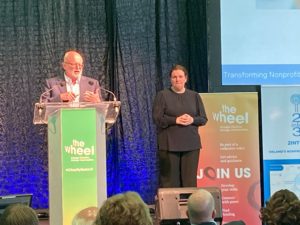
 

The Wheel Summit 2022

2into3 attend The Wheel’s 2022 Summit as Lead Partners

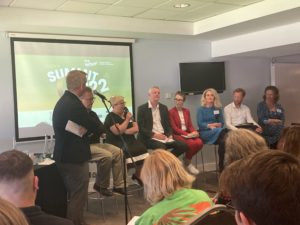
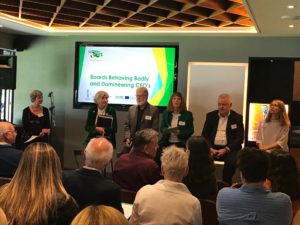
2into3 attended The Wheel’s 2022 Summit on Wednesday 1st June. We caught up with colleagues in the nonprofit sector, learned from their insights and listened to informative discussion panels. This was a fantastic networking opportunity for Irish nonprofits to share information and learn from each other. Our CEO, Dennis O’Connor spoke about ‘Reflections on Leadership Challenges Facing the Sector: Can Managers Cope?’ Our Head of Practice Areas, Rob Foley, Head of Fundraising and Patricia Keenan, Head of Grants Advisory Practice, spoke during ‘Future Funding: The Opportunities and Challenges Ahead’. Hereafter, Luna Atkins, Head of Strategy Advisory Practice, attended the panel during ‘Boards Behaving Badly and Domineering CEOs’. An Taoiseach, Micheál Martin, attended the event to address all of the nonprofits organisations during the event.

Dennis O’Connor, CEO, ‘Reflections on Leadership Challenges Facing the Sector: Can Managers Cope?’

Dennis O'Connor CEO 2into3 2022 the wheel summit

Dennis reflected on the changes in the workplace throughout the years. Organisations in the private sector are required to adapt to external changes regularly, but oftentimes, the nonprofit sector are slower to adapt. At 2into3, we aim to connect strategies from the private sector into the nonprofit sector. Furthermore, Dennis discussed the shift in the role of managers today. There has been a shift in managerial power, from a hierarchical structure, to a team focused one. There has been a shift in skills, from task overseer to performance coach. Finally, there has been a shift to a more fluid workplace, with the implementation of working from home since 2020.

With these changes, it is extremely important for CEO’s to consider how they are supporting their managers by asking the following questions.

  1. What is your workplace like? Does it suit today’s way of working, or was it designed for a different era?
  2. How much are you investing in retraining your managers?
  3. How many of your managers are coaches?
  4. Have your systems caught up with today’s world?
  5. Are your structures a fit for your strategy?

Reflecting on these questions are crucial for CEO’s to consider. The workplace has changed drastically in the past two years, and it is important to support our managers throughout these changes.

Panel Discussions: ‘Future Funding: The Opportunities and Challenges Ahead’

The Wheel Summit 2022 patricia keenan rob foley

In the afternoon, panel discussions took place with our Head of Grants Advisory Practice, Patricia Keenan and Head of Fundraising, Rob Foley. They shared their insights during ‘Future Funding: The Opportunities and Challenges Ahead’.

This panel discussion focused on the future funding landscape and how you might best orient your efforts. They highlighted how organisations can capitalise on future opportunities and navigate the pitfalls that might lie ahead, discussing where that future funding may be found.

Patricia outlined the availability of funds for Irish nonprofits. There are grants available for a range of organisations and it is in the best interest of nonprofits to find out which ones are suitable to their needs. Therefore, nonprofits can base their fundraising plans off these grants. Rob discussed how the average cost of fundraising has decreased in recent years, with 2into3’s fundraising tracker, the Irish Giving Index.

Panel Discussions: ‘Boards Behaving Badly’

Luna Atkins The Wheel Summit 2022

Our final contribution was from Head of Strategic Planning, Luna Atkins, during the ‘Boards Behaving Badly’ panel discussion. This session was part of an ongoing series that discussed what happens when Boards behave badly and CEOs are domineering. Luna, alongside her panellists, explored and discussed the impact this can have on organisations. There is a delicate balancing act of ‘power’ between boards and the CEO and how to proceed when things so wrong. Luna, alongside her panellists, have many years’ experience dealing with these difficult situations. They have seen real trauma resulting from what can only be called an abuse of power.  This can happen on both sides of the board/CEO boundary. The panellists discussed ways to manage this through clarity and the mutual understanding of roles, authorities and the availability and regular use of channels for both communications and feedback. This helps to build trust and constructive relationships.

Address from An Taoiseach, Micheál Martin

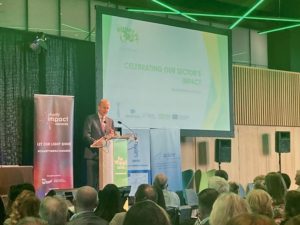
An Taoiseach Micheal Martin The Wheel Summit 2022

An Taoiseach, Micheál Martin, delivered a special address to the nonprofit attendees. He discussed the impact the nonprofit sector has on Irish society, particularly over the past two years. He celebrated the sector’s impact by thanking everyone for their contributions in providing ongoing support to Irish citizens throughout these tough times.

Deirdre Garvey, CEO, The Wheel

In the final plenary, the panel reflected on what they’re learnt over the past two years and launched their five year plan. Deirdre Garvey, CEO, The Wheel, closed the final session with a congratulations to everyone in the sector and positive plans for the future.

Patricia Keenan Head of Grants Advisory Services 2into3 Charities Institute Ireland

2into3 attend Charities Institute Ireland Grants and Trust Forum

On Thursday 19th May, our Head of Grants Advisory Service, Patricia Keenan, presented at Charities Institute Ireland’s Grants and Trusts Forum. During the event, Patricia discussed how nonprofits can use our grants cycle to benefit their application. We work with nonprofits to help them during pre-application, application and implementation stages of the grant process.

At pre-application stage, we have completed feasibility studies for community facilities with average capital investment of €2.5 million. At application stage, our grants team have had a 94% success rate in grant applications with over 50% receiving full allocation.

Patricia discussed how nonprofits can be proactive before their application, outlining how to source possible funds and steps for being methodical during application stage. Patricia also outlined why organisations should be diligent after their application, followed by a final Q&A.


About our Grants Services

Applying for funding can be a difficult and time-consuming process, involving business plans, costs analysis, technical details, stakeholder research and more. 2into3 can offer practical support through the Grants Advisory Service, where we have developed a grant cycle to offer tailored solutions at every step of your grant application.

2into3 have developed a grants cycle. The 2into3 team can assist you each step of the way or if necessary they can complete a stage at a time, all bespoke to your individual organisation’s needs. More information on our grants services (link to page).


About Charities Institute Ireland

Charities Institute Ireland exists to support and enable charities to create positive social change. Charities Institute Ireland envision an Ireland that trusts and values charities for the positive contribution they make to solving challenges in our society.

Charities Institute Ireland hosts a number of meetings, virtual or in-person networking events, and workshops throughout the calendar year. From guest speakers to regulatory updates you can keep abreast of what’s going on in the sector by joining in.


Get in touch

If you are interested in learning more about our Grants services or would like to speak to our Head of Grants Advisory regarding presenting at an event, contact Patricia Keenan.


2into3 and HR Duo collaboration nonprofit sector

2into3 and HR Duo Announce Partnership for Nonprofit Sector 

On Tuesday 17th May, we announced a partnership with HR Duo, a full-service HR solutions provider, to offer nonprofits a full Talent Management solution. With our joint collaboration, we will increase the capacity of our clients’ organisations.

Many nonprofits services are currently stretched. With the impact of the pandemic and demand for talent, together with HR Duo, we seek to assist Irish nonprofits with talent management and HR admin. Therefore, organisations can focus on adding capacity to their current services. 


About HR Duo 

Combining technology and HR expertise, HR Duo’s delivers know how and practical support which enables organisations of all sizes to manage their HR requirements.    

HR Duo aims to make HR easy for businesses. They help hundreds of businesses to introduce best practices, improve team performance and to make better decisions. HR Duo automates all the day-to-day HR practices and places data in the hands of managers so that they can concentrate on what matters. 


Nonprofit Talent Management 

Talent Management is more important than ever in the current employment market and recruiting the right person is a costly and time-consuming process. Furthermore, retaining talent is an ongoing challenge for many nonprofits and requires attention if the organisation aims to grow. However, most nonprofits do not have the capacity to do so within their own resources. With the support of 2into3 and HR Duo, nonprofits can access the expertise they require to assist their growth. 


 “We are delighted to announce our partnership with HR Duo. Our clients can focus on service delivery and other strategic projects, while we along with HR Duo can look after their Talent Management & HR admin,” said Dennis O’Connor, CEO, 2into3. 


This is an exciting partnership and the combined power of 2into3 and HR Duo will add value to clients freeing up resources and deliver added impetus to the nonprofit organisations’ mission,” said Jerome Forde, CEO, HR Duo. 

For more information on the services we provide, click here or contact Dennis O’Connor directly. 

nonprofit talent trends 2022 q3

Nonprofit Talent Trends- Q1 2022

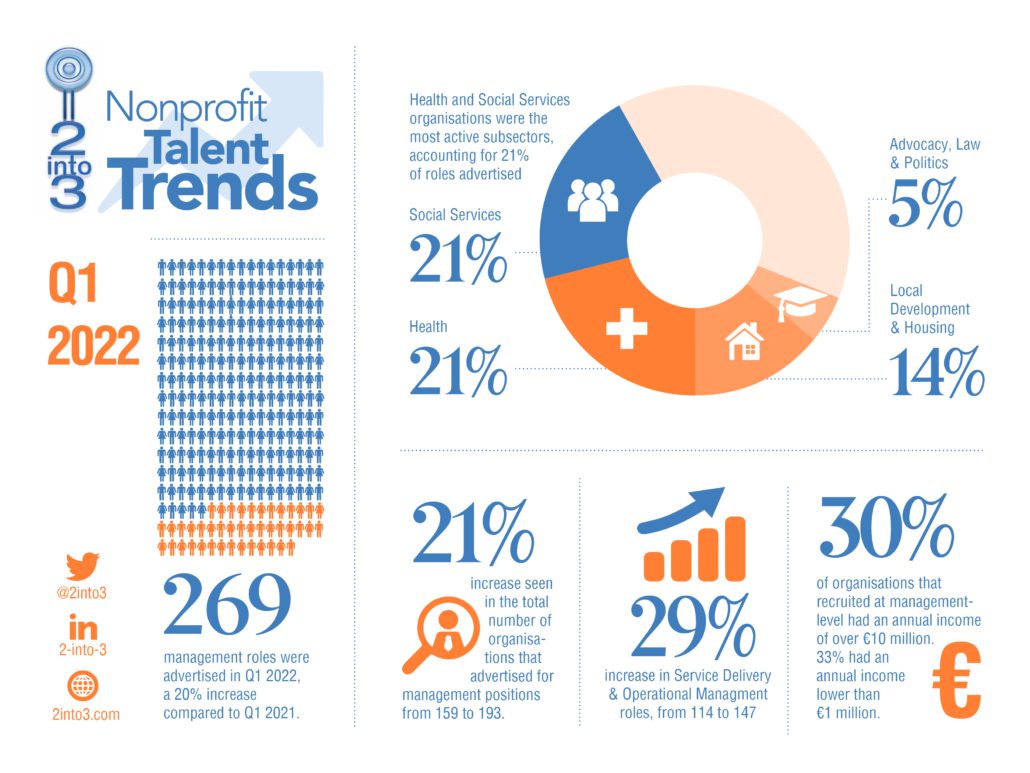
The latest assessment by 2into3 of senior recruitment activity in the nonprofit sector shows activity remains high, with 269 roles advertised in the first 3 months of 2022, versus 226 in the same period last year. That is an increase of 43 roles, or 19.9%.  

 The number of organisations advertising for these positions increased at a similar rate: 193, up from 159, which is a rise of 34 or 21.4%.  

 
Q1 2022 Nonprofit Talent Trends
 

Analysis by Subsector

Every subsector was active, with the greatest number of roles coming from Social Services and Health (both 20.7%), followed closely by Local Development & Housing (14%).  The remining 44.6% was spread between the other 9 subsectors, ranging from just 1% for Recreation & Sport to 4.7% for Advocacy Law & Politics. 

 Each of these subsectors showed an increase in activity versus 2021, with one exception: Philanthropy & Volunteerism roles dropped from 17 to 6 year-on-year. The largest increase was for roles in the Religious sector, albeit from a small base, rising from 1 to 4. Other large uplifts were seen Professional & Vocational roles (up 175%), Arts, Culture & Media (up 125%) and Environment roles (up 133%). 

 There was a significant increase in the number of Service Delivery and Operational Management roles advertised in Q1 2022 versus 2021. Such roles represented over half of all roles advertised and increased by 33 or 29% versus last year. 

 Small increases were also seen in CEO/Executive Director roles, as well as Communications & Marketing, and Admin, Strategy and Governance. The number of roles in HR and Finance fell slightly, while the number of Fundraising & Business Development roles fell from 48 to 42, a drop of 12.5%. 

Senior Nonprofit Recruitment

Overall, we can see the bounce back from the pandemic continues across almost all subsectors but with some variations when we look at the types of roles advertised.  

 Those roles that showed a decline would appear to the role types that saw the smallest decline during the height of the pandemic, so may not have too far to bounce back from, although it will be interesting to track the Fundraising roles in particular as the year progresses. 

 If you would like to view more information on our findings, please contact Fergal O’Sullivan directly.

The Wheel Annual Summit 2into3 Lead Partners

Lead Partnership at The Wheel’s Annual Summit

We are delighted to announce that we are supporting The Wheel’s Annual Summit as Lead Partner for the next three years. The Wheel’s Summit is this year’s largest gathering for charities, community organisations and social enterprises. 

We are particularly looking forward to reconnecting with the wider nonprofit sector after the past two years. With the opportunity of an in-person event, we can share our learnings and look forward to a brighter future within the nonprofit sector. 

Our CEO, Dennis O’Connor, said: “We are delighted to partner with The Wheel for the next three Summit annual events. By bringing together the sector to discuss key topics and facilitating solution-based discussions, The Wheel’s Summit is critical in shaping the future of the sector. Here at 2into3, we understand how important a strong third sector is for society in Ireland. We work with our clients to build the capacity of their organisations so that they can have a transformative social impact.” 

Deirdre Garvey, CEO of The Wheel added: “2into3’s deep knowledge of the sector and extensive experience will further enhance The Summit. We look forward to working with them to develop the Summit as a world-class event”. 


About The Wheel’s Summit 

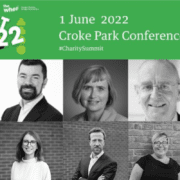
The Wheel’s 2022 Summit is taking place in Croke Park on 1st June 2022 with: 

  • 15 top speakers,  
  • Debates and in-depth discussions 
  • Practical training sessions in Governance, HR, Funding and EU partnerships 
  • Over 30 exhibitors 
  • Invaluable networking opportunities 
  • A celebration of our sector’s impact 
  • A special address by An Taoiseach, Micheál Martin. 


Dennis will be speaking at the plenary session – ‘Reflections on leadership challenges facing the sector’. Patricia Keenan – Head of Grants Advisory Practice, Rob Foley – Head of Fundraising Advisory Practice, will join the panel on ‘Future Funding: The Opportunities and Challenges Ahead.’ Luna Atkins – Head of Strategy Advisory Practice, will be a panellist on ‘Boards Behaving Badly’ session. 

Further information on the programme of events 


More information 

Register to The Wheel’s Summit on Wednesday 1st June 2022. For full programme and breakdown of speakers, visit here 

How to create a strategic fundraising Plan from 2into3

How to create a Strategic Fundraising Plan

What is Strategic Fundraising?


A strategic approach to fundraising is about taking a longer term view of your organisation’s fundraising activities. Closely aligned with your overall organisation’s strategic objectives, a strategic fundraising plan helps steer a long term course for fundraising beyond the day-to-day demands of ‘firefighting’ to plug short term budget gaps.


Steps involved to create a Strategic Fundraising Plan


  1. Create your Fundraising Objectives:

These need to align with your organisation’s overall strategic direction and be ambitious enough to fund the programmes set out in your strategic plan. The objectives must be achievable, measurable and time-bound.


  1. Explore Fundraising Methods:

What is your budget for fundraising? What has and hasn’t worked for you in the past? What methods are your peers and organisations of a similar size using and how successful have they been? (one place to find out more about your peers’ fundraising performance is to subscribe to the Irish Giving Index. Where do your key fundraising strengths lie? Can you convert once-off and sporadic donations to regular giving? Can you strengthen your relationships with your top donors? Why consider relationship based fundraising? 


  1. Ask if fundraising methods new to your organisation might improve your fundraising performance.

This could be a regular or major gifts programme, a new focus on legacy giving or even a consideration of trending cryptocurrency fundraising methods (being an early innovator can deliver great results, but beware the inherent risks!).


  1. Build a team and allocate tasks, responsibilities and resources:

A well briefed, co-ordinated and motivated team needs to work together to deliver the plan.


  1. What role would a capital project play in your strategic fundraising plan?

While initially it may be something well out on your horizon, it is better to include it now as an aspiration so potential major donors are aware of your long term ambitions.


  1. Why do you need and merit support?

Developing a compelling case for support will be the key driver in the success of your fundraising plan. Communicate, communicate, communicate with all your stakeholders: for example, public bodies, donors, media, service users. Different messages will be required and at certain times, specialists may have to employed to ensure the right messages are delivered to the right people at the right time.


  1. Donors will need to be updated with how you are progressing and how their donations are making a difference.

Building a donor communications objective into your strategic fundraising plan is critical for relationship based fundraising. Success in achieving objectives will instil trust with donors and encourage continued involvement.


How a clear Mission, Vision and Values will help form your Strategic Fundraising plan

Explore fundraising opportunities that support your mission. Beware of mission drift: a common pitfall experienced by organisations seeking piecemeal funding is to develop programmes to fit available funding. This may ultimately lead your organisation down a path that distracts from its reason for existence. When exploring funding grants, get into the habit of asking ‘how would that support us in delivering on our mission?’. If you are unable to answer this when considering a funding application, this likely isn’t the right fund for you. There are donors and grants out there that match your organisation’s vision and values.

If your organisation starts to struggle with funding, it is important not to lose sight of your organisation’s long-term vision. Your ability to demonstrate future plans is vital to appealing to donors and philanthropic funders. Strategic fundraising, after all, is more than just keeping the lights on. It demands a clear, long-term action plan with an actionable implementation plan.


Taking the first step

If you are considering developing a new fundraising strategy for your organisation or wish to review your existing strategy, reach out to Rob Foley, 2into3’s Head of Fundraising Advisory Practice, to discuss further: rob.foley@2into3.com +353 86 032 7935


Changes to Management Team 2into3

Changes to 2into3 Management Team

Nonprofit Talent Trends 2into3

Q4 Nonprofit Talent Trends & Annual Overview

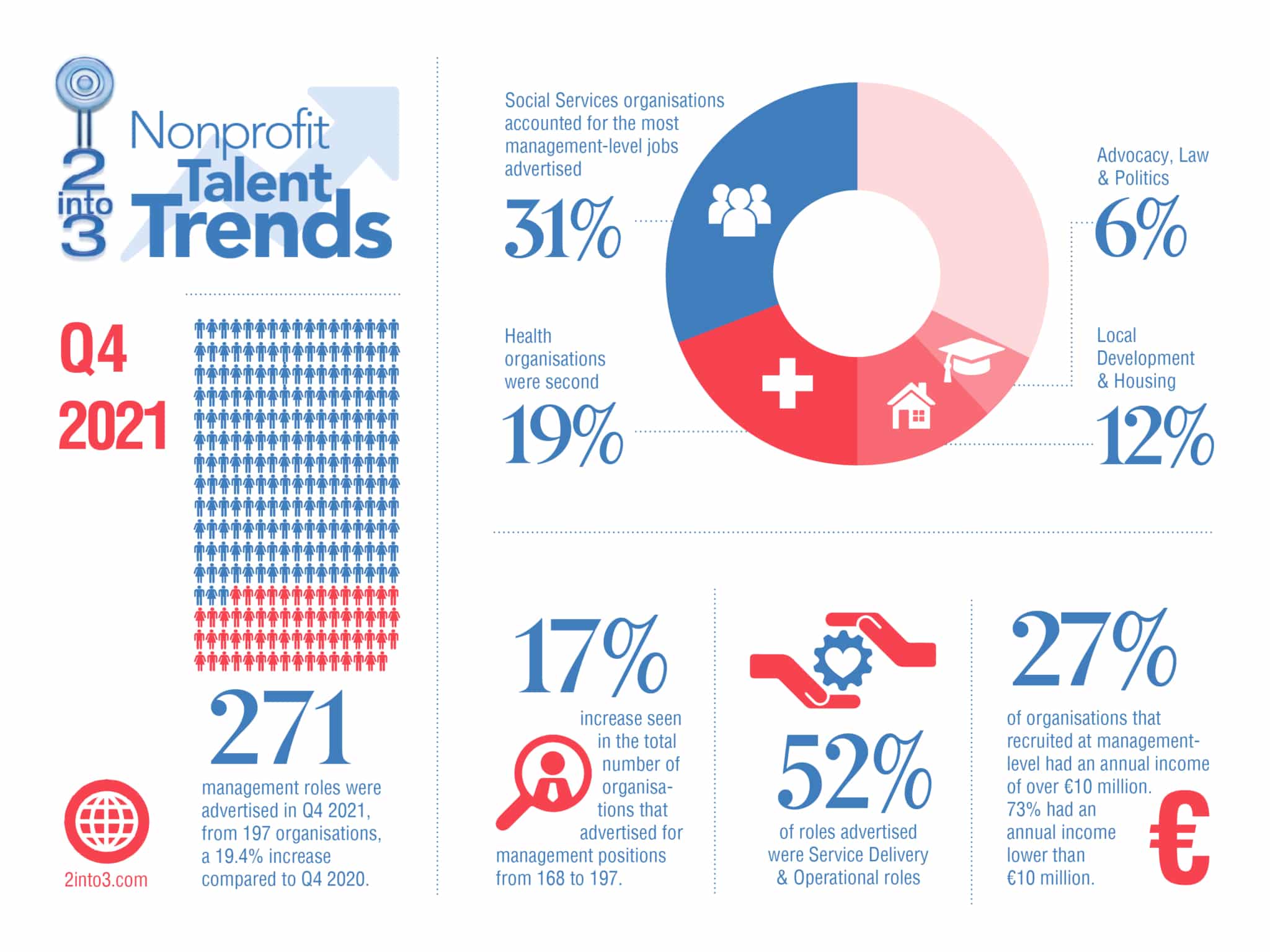
In our latest snapshot of the nonprofit recruitment market for senior roles, we saw a continued rise in both the number of roles being advertised (271, up from 227 in 2020) and in the number of organisations actively recruiting at this level (197, up from 168 the year before). 

This rise of 19% and 17% respectively is not as large a jump as we would have seen in earlier quarters, probably showing that the pandemic rebound has been working its way through the market throughout 2021. While COVID has not gone away, organisations have realised they cannot wait forever to fill their talent gaps and have moved accordingly. 

The numbers are way up on Q4 2019, the last full quarter before COVID became a word we utter several times a day; 144 roles from 115 organisations were advertised between October and December 2019. 

nonprofit talent trends q4 2021

Q4 Nonprofit Talent Trends Breakdown by Role

Two role types saw a fall in activity year-on-year (HR and Finance) albeit from a small base, while all other functions tracked showed increased activity. CEO level roles jumped by 70%, Fundraising & Business Development by 52% and Admin, Strategy & Governance doubled, but again this was from a small base. 

Breakdown by Subsector

Breaking activity down by nonprofit subsector, the changes were mixed. Three subsectors saw a drop in senior recruitment activity we recorded: Local Development & Housing (-9%), Education & Research (-63%), Religion (-50%), Recreation & Sport (-33%). 

By contrast, all other sectors saw a rise, with three in particular showing big increases in role numbers: International (240%), Professional & Vocational (433%), Environment (100%) 

Where income details were available for those organisations that were active in the recruitment market, there was an almost even split between those organisations with income below €1M (47%) and those above the number (53%). 

2021 Senior Recruitment Overview 

Looking at the year as a whole, it is still difficult to make any comparison between 2020 and 2021 without the pandemic being attached as a health warning to the data. 

 The number of roles advertised rose from 558 to 948 according to our tracking. While this is an increase of just under 70%, it must be noted that the 2020 figures include a time when activity went off a cliff. That said, activity is still up by an almost similar number versus 2019, likely a result of recruitment campaigns being delayed. 

Unsurprisingly, such uplifts were not confined to any particular role types, with all specialisms seeing a rise, although some were more active that others in that respect (Communications & Marketing (up 120%), HR (up 72%) and Service Delivery & Operations (up 85%) 

Interestingly enough, despite this strong sector-wide bounce back, there were actually two subsectors that saw a decline in recruitment activity for the full year. Both Education & Research (-25%) and Recreation & Sport (-30%) saw a decline in roles advertised. All other subsectors saw increases in roles advertised. 

What do these figures show?

Leaving aside the residual impact of the pandemic, what the figures here show us is that there is a renewed level of activity in nonprofit recruitment at the senior level, one that seems be sustained throughout year, and one that certain lappers to show no signs of abating in the first weeks of 2022. 

What the figures do not show is the other side of this equation, namely the availability of talent to meet this demand. Active jobseekers are still a somewhat rare breed, with COVID uncertainty still not fully overcome, although signs of increased activity have been seen since Christmas.  


It remains a challenging proposition for organisations to source (and then retain) the talent they need to provide their services, and 2into3 remain extremely active in the market on behalf of a wide range of organisations. Our hope is that while the market remains this active, the increase we have witnessed in jobseeker activity will continue to a point where supply and demand converge in 2022, giving all parties what they need, and the sector the supports it deserves. 

For more information on our recruitment services, visit our website or contact Fergal O’Sullivan.

Relationship based Fundraising 2into3

Why consider Relationship based Fundraising?

During our recent Giving Ireland fundraising webinars, some interesting common themes emerged across the various nonprofit sectors. This included relationship based fundraising, how to diversify income and how to use data better to improve fundraising returns. We have seen the recent successes that relationship based fundraising has delivered to many nonprofits in Ireland.

What is Relationship based Fundraising?

Relationship based fundraising incorporates many fundraising methods including Major Gifts, Trusts & Foundations, Legacies and Corporate Donations. Developing a long term relationship with a donor or company takes time. It’s not a fundraising income stream that can be activated instantly but the rewards to your organisation will far outweigh the required inputs if executed properly.

Why use Relationship based Fundraising?

Successful fundraising performance relies more and more on relationship based fundraising methods. They can untap a stream of income that can secure the future growth of your organisation and help it weather any unpredictable future events. It can evolve into a mutually beneficial relationship for both funder and nonprofit, based on clear expectations, continuous communication, mission alignment, respect and ultimately trust.


How to cultivate a meaningful relationship with donors?

Consider how your organisation will develop its donor-based relationships with the following:

  • Who will you target and at what level?

Begin by looking inside your organisation. Identify current and past donors as well as those of high-net worth known to key stakeholders. Research on trusts/foundations is also vital as some will support specific projects and causes which may rule out your organisation.

  • Do you have the organisational culture and the right person to make the ask?

Major gift fundraising involves a high-level skill-set and dedication. A full time major gift fundraiser can manage a maximum of 100 relationships, 50 might be a more realistic number in more advanced stages of cultivation.  Executive and Board engagement in donor cultivation and making the ‘ask’ is often required.

  • How to build relationships with funders? Do you have a strong case for support?

Major donors and trusts/foundations want to make a demonstrable impact to an organisation. Building a compelling case for support educates prospective donors and motivates them to support your  organisation’s ambitions.

  • Can you invest the time?

Developing relationships takes time. Securing a major gift can take up to 3 years and typically involves multiple meetings. Building a connection and network of trusts/foundations and applying to each with a tailored submission is key. It all takes time but after an initial lag a flow of income should begin to emerge from all the hard work!


Taking the Next step:

Is your organisation ready to engage in these fundraising methods? Feel free to contact Rob Foley at rob.foley@2into3.com or +353 21 237 9882


Secret Link