
The Opportunity Irish Sport Hasn’t Tapped Yet
– Hannah McLoughlin, Consultant – Funding
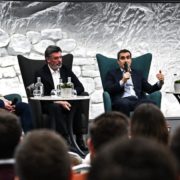
2into3 and Graham-Pelton, one of the US’s leading philanthropic consultancy firms, hosted a webinar titled “Fundraising in the US: A Practical Guide for Irish Sporting Organisations”, with James O’Callaghan as a guest speaker from the Irish Sailing Foundation. The most important insight from the session had nothing to do with tax structures or diaspora networks. It came down to one question, and most Irish sporting organisations have never properly answered it;
“Why should a stranger, thousands of miles away, care about what you do?”
Sport has shaped how I think and work, it has taught me to compete on the edges of limited resources, which is exactly where most Irish NGBs find themselves. I also know, from the inside, what it feels like when funding doesn’t stretch far enough. That’s partly why this topic matters to me, and why I think Irish sport needs to take it seriously.
The Irish Sailing Foundation are the pioneers of this model in Ireland. Since 2015 they have raised over €3 million for high-performance sailing, supported more than 300 sailors and brought in €500,000 in 2025 alone – ten years into the work. They operate as a separate philanthropic entity with a voluntary board, independent of Irish Sailing as the NGB.
The American Philanthropy Market: What You Need to Know
Americans donated $592 billion in 2024. Philanthropy is not a niche behaviour in the US – it is culturally embedded in a way that has no real equivalent in Ireland. Giving is habitual, expected, and for many Americans an expression of identity rooted in everything from religious tradition to civic pride.
We are also at the beginning of what is being called the “Great Wealth Transfer” an estimated $124 trillion expected to change hands over the next 20 years as an ageing population passes assets to the next generation, with an estimated $18 trillion of that earmarked for charity. A significant share of that wealth will be inherited by women, and the women’s philanthropy movement in the US is accelerating rapidly. For Irish sporting organisations with any kind of gender equity or women’s sport angle, that is a real and growing opportunity.
The diaspora connection gives Irish organisations a head start that most international peers simply don’t have. There are millions of Irish-Americans with a genuine emotional connection to Ireland, many of them in exactly the demographic most likely to give. The pipeline exists. The question is whether Irish sport is organised enough, and honest enough with itself to access it.
Why Americans Give
The number one reason Americans give is because they were asked not because they discovered an organisation on their own, or because a grant portal opened, or because they read a press release.
Someone asked them. Directly, personally, with a clear purpose.
Most Irish organisations are not doing this. They are waiting for the right connection, the right moment, the right introduction. Meanwhile the ask never comes, and neither does the money.
Beyond the ask itself, the motivators that drive giving are worth understanding properly:
- Connection to a cause or community.
- Belief in leadership and transparency.
- The desire for recognition.
- Matching gift opportunities, which have been used with remarkable effect in the US.
- Tax efficiency, particularly for larger, more complex gifts.
On that last point: the instinct to lead with tax benefits is a mistake. For most donors, tax considerations are not the primary motivator. They matter at scale, and any serious fundraising strategy needs to account for them, but they are not your opening line. If your case for support begins with “and you can claim a deduction,” you have already lost the room.
What Actually Answers the Question
Knowing why Americans give is one thing. Giving them a reason to give to you is another.
This is where most Irish organisations need to do honest internal work before they pick up the phone to anyone in Boston or New York. You need a case for support, a clear, compelling, emotionally resonant answer to the question this piece opened with. Not “we fund high-performance athletes,” but the answer to what happens when a young person from a disadvantaged background gets access to your programme. What changes for them? What does it feel like to watch a training session at your club? If someone came along and you had two minutes to make them care, what would you say?
Donors give to what they can picture. They respond to impact, not infrastructure.
Honesty matters here too. If your organisation is facing a funding gap, saying so clearly is more compelling than vague optimism. Most donors do not want to rescue a sinking ship, but they absolutely want to feel that their contribution will make a difference – and there is a real distinction between those two things.
You also need to be prepared to share your finances. Transparency is increasingly non-negotiable in this space, particularly with younger donors who expect more visibility into where their money goes than has historically been the case.
What the Tax Structures Actually Look Like
Any Irish organisation serious about US fundraising will need to understand 501(c)(3) – the US tax-exempt designation that allows donors to claim federal tax deductions on charitable gifts. Without this, or without equivalency, you are asking donors to give without tax benefit, which becomes a meaningful barrier at higher gift levels.
The practical entry point for most Irish organisations is The Ireland Funds (American Ireland Fund). This is a well-established body that operates through chapters across the US, hosts events targeting high-net-worth Irish-Americans, and provides a tax-efficient giving route for approved Irish organisations. Getting approved through this structure is a realistic and relatively accessible first step.
It is also worth understanding the broader philanthropic architecture:
- Donor Advised Funds (DAFs): philanthropic accounts, typically offered through financial firms, that allow donors to contribute funds, take an immediate tax deduction, and recommend grants to charities over time. There are currently more than $250 billion sitting in DAFs in the US, a large pool of capital actively seeking recipients.
- Bequests and planned giving: gifts made through a will. Often completely overlooked by sports organisations but a meaningful driver of total philanthropic income when cultivated over time.
- Family foundations: exist in large numbers but come with significant governance complexity – an annual filing, a board, ongoing compliance and are less accessible as a starting point.
- Corporations: often vocal about their giving, but not the primary vehicle here.
- Individual donors are the backbone of American philanthropy, and they always have been.
The Myths That Cost Irish Organisations Real Money
Events are not a fundraising strategy. A golf outing introduces people to your organisation. It does not build a philanthropic programme. Events are expensive, transactional, and the net return rarely justifies the investment unless they are being used deliberately as cultivation tools within a wider relationship strategy.
Grants are not philanthropy. Relying on grant income is not the same as building a donor base. Grants are important, but they don’t compound the way relationships do, and they don’t build the long-term income resilience that a genuine philanthropic programme creates.
Asking is not rude. This is particularly worth saying in an Irish context. There is a deep cultural awkwardness around making a direct financial ask, especially of people we know. The US framing is completely different: asking someone to give is a sign that you respect their capacity and believe they care enough to want to contribute. The reluctance to ask directly is one of the single biggest barriers holding Irish organisations back.
Not all wealthy people are the most generous. Scale of wealth and scale of giving are not the same thing. Some of the most impactful donors give proportionally more than individuals with far larger means, and the organisations that assume otherwise waste time chasing the wrong prospects.
Your Case for Support
If the case for support is so clearly the answer, why do so few organisations actually build one properly?
James O’Callaghan, a board member of the Irish Sailing Foundation, named the real obstacle: confirmation bias. Most sporting organisations believe, genuinely and not unreasonably, that their cause is worthy. Their athletes work hard, their community impact is real, their programme deserves support. Because they believe that, they assume a donor will see it too. They build their case for support around what they already know to be true from the inside, the training load, the competition calendar, the medal count.
But a donor in Chicago or Boston is not starting from that place. They are starting from zero. They have no context, no emotional attachment, no reason yet to care. And if your opening is “we are a high-performance sporting organisation that needs more funding,” you have told them nothing that makes them want to reach into their pocket.
This is the question this entire piece keeps circling back to: why should a stranger, thousands of miles away, care about what you do? Most organisations have never had to answer it, because everyone around them already knows the answer. The moment you step outside that room, the question gets a lot harder – and a lot more necessary.
Donors give to what they can picture. And the organisations that cannot answer that question clearly, not in a brochure, but in a conversation, with a real person sitting across from them, are not ready to fundraise in the US, regardless of how good their athletes are or how worthy their cause genuinely is.
The Long Game Is the Only Game
None of this is quick. The Irish Sailing Foundation has been at this for ten years. The organisations that do it well start with who they know, invest heavily in cultivation before they ever make an ask, and treat stewardship, how they look after a donor after a gift – as seriously as the ask itself. Handwritten notes still matter. In-person meetings still outperform everything. Matching gift campaigns work. None of it is glamorous, and all of it takes longer than you think.
You also have to spend money to raise money. That is not a reason to avoid this, it is a reason to be strategic about where you invest. The highest return comes from personal relationship-building, not events and not digital campaigns.
What This Actually Means for Irish Sport
Sport Ireland provides partial funding to NGBs for high-performance programmes. It was never designed to cover the full cost, and the gap between what statutory funding provides and what genuine high-performance development requires is real and widening. Philanthropy, approached strategically and with patience, is one of the few credible ways to close it.
The Irish Sailing Foundation have shown it is possible. The architecture they have built – a separate voluntary entity, tiered giving structures and a long-term relationship programme took a decade to develop and is the product of serious commitment from serious people.
For any NGB, club, or sporting body thinking about this: the opportunity is real, the diaspora connection is an advantage most international peers would envy, and the expertise to help navigate the structures now exists in Ireland. But the streets are not paved with gold. What they are paved with is relationships, and the willingness to do the hard internal work of understanding why a stranger, thousands of miles away, should care about what you do.
Most organisations haven’t asked themselves that honestly yet. That’s probably where to start.
Get in Touch
If your sport has an ambition to secure ongoing philanthropic donations, we welcome the opportunity to discuss how philanthropy could work for your organisation. Get in touch with Dennis O’Connor at dennis@2into3.com to explore this pathway in detail.