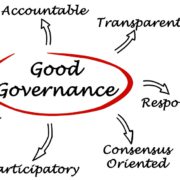
Governance is the Real Integrity Play
PwC’s latest Global Sports Survey signals a shift: integrity is no longer just the right thing to do — it’s a commercial and reputational imperative. Sheena Horgan explores what that means for sporting bodies.

PwC’s latest Global Sports Survey signals a shift: integrity is no longer just the right thing to do — it’s a commercial and reputational imperative. Sheena Horgan explores what that means for sporting bodies.

Philanthropy has long played a transformative role in sport internationally, enabling investment in athlete development, grassroots participation, and infrastructure that public funding alone cannot sustain. In Ireland, while our community support for sport runs deep, formalised philanthropic giving has been slower to develop. That is now changing. Recent tax incentives are creating the conditions for philanthropy to become a meaningful and sustainable income stream for Irish sport.
Earlier this month marked a significant moment in Irish sport’s pathway to philanthropy. The Irish Sailing Foundation revealed that 2025 saw it support the Irish Sailing Performance Pathway with €500,000 in philanthropic donations – representing 30% of the Pathway’s 2025 budget. The Foundation is now targeting €1 million in 2026, a success that has been a decade in the making. This was followed by the Olympic Federation of Ireland’s launch of the Team Ireland Foundation, with a view to securing philanthropic donations for Los Angeles 2028 and beyond. The Football Association of Ireland also announced the establishment of the Global Ireland Football Foundation, complete with an independent Chair and an experienced Director of Development.
Three sporting bodies. Three foundations. A clear focus on philanthropy.
At the Federation of Irish Sport Leaders Forum, 2into3 CEO Dennis O’Connor moderated a panel discussion on ‘Foundations as a Path to Structural Resilience’, exploring the practicalities and learnings from those who have already embarked on this journey.
James O’Callaghan, representing the Irish Sailing Foundation – established ten years ago – was emphatic about the value of independence. “Having a separate entity is best practice,” he explained. An independent entity allows the NGB to focus on its core work while the foundation builds long-term donor relationships. The Foundation initially had private support for specific campaigns, which ended once those campaigns concluded. Recognising this, they invested in a dedicated fundraiser who could nurture ongoing relationships with donors. Through their patron programme – seeking €50,000 per annum over five years – they targeted twelve supporters in year one and secured eight. “Spend the money to hire the right person,” O’Callaghan emphasised. Fundraising requires a particular skillset, and foundation boards are increasingly providing seed funding to invest in this capability, seeing it as essential to achieving returns on their philanthropic ambitions.
Currently, Type B and C NGBs, the Olympic Federation of Ireland, and Paralympics Ireland are already eligible for tax incentives that benefit donors. The Federation of Irish Sport is advocating for sport foundations to also be made eligible – a move that would recognise their role as independent entities that improve governance while unlocking new sources of philanthropic support.
Looking Ahead
With €1.82 billion in fundraised income across the Irish nonprofit sector in 2022, and per capita giving of €354, the philanthropic opportunity for sport is significant. The Giving Ireland 2024 research highlights Ireland’s strong culture of generosity – and the potential to channel more of that giving towards sporting development.
If your sport has an ambition to secure ongoing philanthropic donations, we welcome the opportunity to discuss how philanthropy could work for your organisation. Get in touch with Dennis O’Connor at dennis@2into3.com to explore this pathway in detail.

Importance of diversifying income streams for NGBs to ensure long-term sustainability and greater inclusion.

Effective governance is not just a box-ticking exercise. It is the foundation for trust and, critically, for funding, which ultimately supports long-term success.

Key lessons that National Governing Bodies (NGBs) can take from the events surrounding the Camogie shorts versus skorts debate, highlighting the importance of listening, transparency, and adaptability.

The foundation of success for any sports team lies in having a clear game plan. This plan leverages the strengths of players and provides a direction for the team’s efforts on the field. Just as a game plan is an important step in guiding a team towards victory, developing a Strategic Plan helps sports organisations to achieve their goals.
Whether you are volunteer-led local club, a Local Sports Partnership, a National Governing Body, let’s look at 4 ways your organisation could benefit from a Strategic Plan.
Ever find yourself wishing there were more hours in the day, volunteers by the pitch, or funds in the coffers? It is essential that the energy of your staff and volunteers, as well as your finite resources, are directed in the best way. Identifying your top priorities in your Strategic Plan means that all efforts can be orientated in the right direction.
Developing and implementing a Strategic Plan is a collective endeavour, and an opportunity to bring together everyone in your organisation, to work on your organisation.
By consulting your players, members, volunteers and staff in the strategic planning process – asking them for their feedback, suggestions and inputs – will not only make sure that your Strategic Plan is relevant but will also help to build common ownership when it comes to delivery. And when everyone understands your organisation’s direction and their particular role in contributing towards that, it fosters collaboration and motivation.
A Strategic Plan ensures you have all your ducks in a row so that when a grant becomes available, you aren’t scrambling to react. It clearly outlines your organisation’s mission, goals, and the specific steps you’ll take to achieve them – which is exactly what grant committees are looking for. Being proactive and prepared makes it easier to stand out in an increasingly competitive world of grants.
It also prevents against your organisation being distracted by or wasting time and effort applying for grants that don’t meet your strategic aims or resource requirements.
By laying out the vision and ambitions in your Strategic Plan to all your stakeholders and to external audiences via your website, you open up the opportunity for potential collaborators and funders to recognise potential areas of synergy, innovation and partnership – and to maybe even approach you with an offer that you could never had dreamed of.
From our experience, some of the most exciting collaborations have come from the least likely of places – but they all started with a bolt of inspiration and your Strategic Plan could provide just that.
2into3 has deep experience in developing Strategic Plans with sports organisations across Ireland. If you’re interested in learning more about how a Strategic Plan could benefit your sports organisation, please reach out to our Director of Advisory Services, Sheena Horgan at sheena.horgan@2into3.com.