The Opportunity Irish Sport Hasn’t Tapped Yet

Hannah McLoughlin, Consultant – Funding

2into3 and Graham-Pelton, one of the US’s leading philanthropic consultancy firms, hosted a webinar titled “Fundraising in the US: A Practical Guide for Irish Sporting Organisations, with James O’Callaghan as a guest speaker from the Irish Sailing Foundation. The most important insight from the session had nothing to do with tax structures or diaspora networks. It came down to one question, and most Irish sporting organisations have never properly answered it; 

“Why should a stranger, thousands of miles away, care about what you do?” 

Sport has shaped how I think and work, it has taught me to compete on the edges of limited resources, which is exactly where most Irish NGBs find themselves. I also know, from the inside, what it feels like when funding doesn’t stretch far enough. That’s partly why this topic matters to me, and why I think Irish sport needs to take it seriously. 

The Irish Sailing Foundation are the pioneers of this model in Ireland. Since 2015 they have raised over €3 million for high-performance sailing, supported more than 300 sailors and brought in €500,000 in 2025 alone – ten years into the work. They operate as a separate philanthropic entity with a voluntary board, independent of Irish Sailing as the NGB. 

The American Philanthropy Market: What You Need to Know    

Americans donated $592 billion in 2024. Philanthropy is not a niche behaviour in the US – it is culturally embedded in a way that has no real equivalent in Ireland. Giving is habitual, expected, and for many Americans an expression of identity rooted in everything from religious tradition to civic pride. 

We are also at the beginning of what is being called the “Great Wealth Transfer” an estimated $124 trillion expected to change hands over the next 20 years as an ageing population passes assets to the next generation, with an estimated $18 trillion of that earmarked for charity. A significant share of that wealth will be inherited by women, and the women’s philanthropy movement in the US is accelerating rapidly. For Irish sporting organisations with any kind of gender equity or women’s sport angle, that is a real and growing opportunity. 

The diaspora connection gives Irish organisations a head start that most international peers simply don’t have. There are millions of Irish-Americans with a genuine emotional connection to Ireland, many of them in exactly the demographic most likely to give. The pipeline exists. The question is whether Irish sport is organised enough, and honest enough with itself to access it. 

 Why Americans Give 

The number one reason Americans give is because they were asked not because they discovered an organisation on their own, or because a grant portal opened, or because they read a press release.  

Someone asked them. Directly, personally, with a clear purpose. 

Most Irish organisations are not doing this. They are waiting for the right connection, the right moment, the right introduction. Meanwhile the ask never comes, and neither does the money. 

Beyond the ask itself, the motivators that drive giving are worth understanding properly: 

  1. Connection to a cause or community. 
  2. Belief in leadership and transparency. 
  3. The desire for recognition. 
  4. Matching gift opportunities, which have been used with remarkable effect in the US.  
  5. Tax efficiency, particularly for larger, more complex gifts. 

 On that last point: the instinct to lead with tax benefits is a mistake. For most donors, tax considerations are not the primary motivator. They matter at scale, and any serious fundraising strategy needs to account for them, but they are not your opening line. If your case for support begins with “and you can claim a deduction,” you have already lost the room. 

What Actually Answers the Question 

Knowing why Americans give is one thing. Giving them a reason to give to you is another. 

This is where most Irish organisations need to do honest internal work before they pick up the phone to anyone in Boston or New York. You need a case for support, a clear, compelling, emotionally resonant answer to the question this piece opened with. Not “we fund high-performance athletes,” but the answer to what happens when a young person from a disadvantaged background gets access to your programme. What changes for them? What does it feel like to watch a training session at your club? If someone came along and you had two minutes to make them care, what would you say? 

Donors give to what they can picture. They respond to impact, not infrastructure. 

Honesty matters here too. If your organisation is facing a funding gap, saying so clearly is more compelling than vague optimism. Most donors do not want to rescue a sinking ship, but they absolutely want to feel that their contribution will make a difference – and there is a real distinction between those two things. 

You also need to be prepared to share your finances. Transparency is increasingly non-negotiable in this space, particularly with younger donors who expect more visibility into where their money goes than has historically been the case. 

What the Tax Structures Actually Look Like 

Any Irish organisation serious about US fundraising will need to understand 501(c)(3) – the US tax-exempt designation that allows donors to claim federal tax deductions on charitable gifts. Without this, or without equivalency, you are asking donors to give without tax benefit, which becomes a meaningful barrier at higher gift levels. 

The practical entry point for most Irish organisations is The Ireland Funds (American Ireland Fund). This is a well-established body that operates through chapters across the US, hosts events targeting high-net-worth Irish-Americans, and provides a tax-efficient giving route for approved Irish organisations. Getting approved through this structure is a realistic and relatively accessible first step. 

It is also worth understanding the broader philanthropic architecture: 

  • Donor Advised Funds (DAFs): philanthropic accounts, typically offered through financial firms, that allow donors to contribute funds, take an immediate tax deduction, and recommend grants to charities over time. There are currently more than $250 billion sitting in DAFs in the US, a large pool of capital actively seeking recipients.  
  • Bequests and planned giving: gifts made through a will. Often completely overlooked by sports organisations but a meaningful driver of total philanthropic income when cultivated over time. 
  • Family foundations: exist in large numbers but come with significant governance complexity – an annual filing, a board, ongoing compliance and are less accessible as a starting point.   
  • Corporations: often vocal about their giving, but not the primary vehicle here. 
  • Individual donors are the backbone of American philanthropy, and they always have been. 


The Myths That Cost Irish Organisations Real Money
 

Events are not a fundraising strategy. A golf outing introduces people to your organisation. It does not build a philanthropic programme. Events are expensive, transactional, and the net return rarely justifies the investment unless they are being used deliberately as cultivation tools within a wider relationship strategy. 

Grants are not philanthropy. Relying on grant income is not the same as building a donor base. Grants are important, but they don’t compound the way relationships do, and they don’t build the long-term income resilience that a genuine philanthropic programme creates. 

Asking is not rude. This is particularly worth saying in an Irish context. There is a deep cultural awkwardness around making a direct financial ask, especially of people we know. The US framing is completely different: asking someone to give is a sign that you respect their capacity and believe they care enough to want to contribute. The reluctance to ask directly is one of the single biggest barriers holding Irish organisations back. 

Not all wealthy people are the most generous. Scale of wealth and scale of giving are not the same thing. Some of the most impactful donors give proportionally more than individuals with far larger means, and the organisations that assume otherwise waste time chasing the wrong prospects. 

Your Case for Support 

If the case for support is so clearly the answer, why do so few organisations actually build one properly? 

James O’Callaghan, a board member of the Irish Sailing Foundation, named the real obstacle: confirmation bias. Most sporting organisations believe, genuinely and not unreasonably, that their cause is worthy. Their athletes work hard, their community impact is real, their programme deserves support. Because they believe that, they assume a donor will see it too. They build their case for support around what they already know to be true from the inside, the training load, the competition calendar, the medal count. 

But a donor in Chicago or Boston is not starting from that place. They are starting from zero. They have no context, no emotional attachment, no reason yet to care. And if your opening is “we are a high-performance sporting organisation that needs more funding,” you have told them nothing that makes them want to reach into their pocket. 

This is the question this entire piece keeps circling back to: why should a stranger, thousands of miles away, care about what you do? Most organisations have never had to answer it, because everyone around them already knows the answer. The moment you step outside that room, the question gets a lot harder – and a lot more necessary. 

Donors give to what they can picture. And the organisations that cannot answer that question clearly, not in a brochure, but in a conversation, with a real person sitting across from them, are not ready to fundraise in the US, regardless of how good their athletes are or how worthy their cause genuinely is. 

 The Long Game Is the Only Game 

None of this is quick. The Irish Sailing Foundation has been at this for ten years. The organisations that do it well start with who they know, invest heavily in cultivation before they ever make an ask, and treat stewardship, how they look after a donor after a gift – as seriously as the ask itself. Handwritten notes still matter. In-person meetings still outperform everything. Matching gift campaigns work. None of it is glamorous, and all of it takes longer than you think. 

You also have to spend money to raise money. That is not a reason to avoid this, it is a reason to be strategic about where you invest. The highest return comes from personal relationship-building, not events and not digital campaigns. 

What This Actually Means for Irish Sport 

Sport Ireland provides partial funding to NGBs for high-performance programmes. It was never designed to cover the full cost, and the gap between what statutory funding provides and what genuine high-performance development requires is real and widening. Philanthropy, approached strategically and with patience, is one of the few credible ways to close it. 

The Irish Sailing Foundation have shown it is possible. The architecture they have built – a separate voluntary entity, tiered giving structures and a long-term relationship programme took a decade to develop and is the product of serious commitment from serious people. 

For any NGB, club, or sporting body thinking about this: the opportunity is real, the diaspora connection is an advantage most international peers would envy, and the expertise to help navigate the structures now exists in Ireland. But the streets are not paved with gold. What they are paved with is relationships, and the willingness to do the hard internal work of understanding why a stranger, thousands of miles away, should care about what you do. 

Most organisations haven’t asked themselves that honestly yet. That’s probably where to start. 


Get in Touch

If your sport has an ambition to secure ongoing philanthropic donations, we welcome the opportunity to discuss how philanthropy could work for your organisation. Get in touch with Dennis O’Connor at dennis@2into3.com to explore this pathway in detail.

Corporate Charity Partnerships: Turning Challenges into Opportunities

If you’ve ever tried to build a corporate partnership, you’ll know it’s not always straightforward. It takes time, patience, and plenty of back-and-forth to find the right fit. But when it works, it can be a real game-changer for your charity — opening doors, raising your profile, and giving you the stability to plan for the future.


Why Corporate Partnerships Matter

Corporate partnerships can offer much more than money. Many companies share skills, encourage staff volunteering, or connect you to networks you might not otherwise reach. There’s a trust factor too — when a well-known company backs your cause, it signals to others that your charity is credible and well-run.

Long-term partnerships are especially valuable. They give you breathing space to plan ahead, grow your work, and make a lasting impact, instead of constantly chasing the next fundraiser. When looking for potential partners, fit matters more than the size of the donation — a company that genuinely shares your values will go further than a high-profile name with no real connection to your mission.


Common Challenges

Most charities encounter a few familiar hurdles when it comes to corporate partnerships. Mismatched expectations are one of the most common — businesses often want quick, visible results, while your charity is focused on long-term, systemic change. Clear and honest communication from the outset goes a long way in bridging that gap.

Capacity is another real challenge, particularly for smaller organisations. Managing a partnership well takes time and consistency — regular check-ins, reporting, and relationship-building all require genuine effort. It’s worth being realistic about what your team can take on before committing.

Mission drift is worth watching out for too. The desire to strengthen a partnership can sometimes pull a charity away from its core purpose. Good governance and transparency protect both your reputation and the trust your supporters have placed in you. Never compromise what you stand for, no matter how attractive the opportunity looks on paper.


Making Partnerships Work

Successful partnerships are built on honesty, shared values, and mutual benefit. Before any conversation, be clear about your charity’s goals and what you can genuinely offer a corporate partner in return. This clarity makes it far easier to identify whether a potential partner is the right fit — rather than spending months finding out the hard way.

Setting expectations early is equally important. Discuss timelines, reporting, and what success looks like for both sides. Treat it as a collaboration, not a transaction. The strongest partnerships are ones where both organisations come away feeling the relationship is worth their investment.

Think creatively about what value the partnership can add beyond a financial contribution. Skills-sharing initiatives, co-branded awareness campaigns, and employee engagement projects can strengthen both sides and deepen the relationship over time. The more value both parties find in the arrangement, the more durable it becomes.

Finally, keep communication consistent. Regular check-ins and small updates prevent misunderstandings from building up and keep both parties aligned. A partnership can drift quietly off course without either side noticing — until it’s too late to course-correct. Transparency and routine contact are what keep it on track.


Final Thoughts

For Irish charities, corporate partnerships aren’t just about funding — they’re an opportunity. Approach them with clarity, care, and confidence, and they can become long-lasting relationships that genuinely make a difference.

If your charity is thinking about building or refreshing its corporate partnerships, feel free to reach out to Denise Cranston at denise.cranston@2into3.com, to talk through how to get started, and what works in practice.

Nonprofit Talent Trends Q2 2026

The Wheel’s survey of more than 100 organisations, as referenced in The Irish Times (May 2026) found that nearly a quarter of charities said they had doubts about their ability to sustain existing services this year due to funding shortfalls, and 38% reported being unable to recruit or retain staff, largely because of uncompetitive pay.

Our latest analysis of senior-level recruitment across the Irish nonprofit sector points to a continued cooling in hiring activity compared with the same period last year. Through tracking advertised roles across a range of job platforms, 2into3 identified a total of 191 management-level roles advertised in Q2 2026, a decrease of 24% from the 250 roles tracked in the same quarter of 2025. There was also a 19% decrease in the number of organisations recruiting, falling from 186 in Q2 2025 to 151 in Q2 2026.

Q2 2026 2into3 NPTT

Activity by Subsector

Consistent with previous quarters, a number of organisations advertised their vacancies anonymously. As a result, of the 191 roles we recorded, 157 could be assigned to an identifiable subsector.

subsector breakdown Q2 2026

Roles by Subsector:

The Social Services subsector share has held broadly steady on the same quarter last year – remaining the most active by a clear margin – accounting for 33% of the senior-level roles tracked in Q2 2026. This is not surprising given that Tusla’s 2025 annual report noted a milestone moment for the State’s child and family services: the first time the number of child safety and welfare referrals breached 100,000 in a single year (Irish Times).

This is consistent with sustained demand for services in areas such as homelessness, disability, and family support. Figures from the Department of Housing showed that in May 2026, 17,447 people were living in emergency accommodation (Gov.ie) – a crisis which is deeply intertwined with mental health and addiction challenges.

Health (23%) and Local Development & Housing (14%) followed as the next most active subsectors. Together, these three subsectors account for around 70% of all assignable roles, underscoring how the sector’s recruitment activity remains concentrated in frontline service delivery.

International activity held steady at 6% of assignable roles (10 roles in Q2 2026 compared with 11 in Q2 2025). Elsewhere, the sharpest year-on-year falls came in Education & Research (down from 14 roles to 5) and Recreation & Sport (down from 16 roles to 4), both of which saw their share of activity reduce markedly.


Activity by Role Function

roles by function Q2 2026 NPTT

Service Delivery & Operational Management roles remain the most sought-after leadership function, representing 35% of all roles in Q2 2026. However, this marks a decline in share from 41% in Q2 2025, and the number of roles fell from 103 to 66.

Policy, Advocacy & Campaigning more than doubled its share, rising from 2% to 6% (6 roles to 12), while HR increased from 4% to 7% (10 roles to 14). The complexity introduced by Workplace Relations Commission wage agreements is a likely driver: while some organisations received additional funding to implement salary increases, many are not covered by these arrangements, creating significant internal equity and HR management challenges which require experienced HR leadership and expertise.

Fundraising & Business Development grew slightly from 18% to 20% of roles, indicating that income diversification remains a priority as organisations look to broaden their funding base and reduce reliance on any single source.

Finance held constant at 10%, while CEO and Executive Director roles fell from 12% to 8% of activity (29 roles to 15), suggesting a degree of stabilisation at the very top of organisations after a busier period for leadership turnover witnessed in 2025.

Activity by Income Type

Data on income was available for 112 of the 151 organisations in Q2 2026, as those that advertised anonymously or did not disclose their income were excluded.

  • 13% (15 organisations) reported an annual income of less than €1 million.
  • 52% (58 organisations) reported an annual income of between €1 million and €10 million.
  • 35% (39 organisations) reported an annual income exceeding €10 million.

Key Observations

Our data for Q2 2026 illustrates a sector which is making careful, targeted investments in the internal functions (HR, policy, fundraising) that will determine its long-term resilience. The contraction in overall hiring is a signal that the sector is under strain.

The continued dominance of Social Services, Health, and Local Development & Housing in the subsector breakdown is unsurprising, with hiring trends again serving as a reflection of where public need and public funding remain most concentrated.

Get in Touch

Our Talent Team records senior roles in the nonprofit sector and produces quarterly insights. To explore previous Nonprofit Talent Trends Reports, visit our Talent Insights page. For more information, contact Shannon Barrett, Principal – Talent Services, at Shannon.barrett@2into3.com.

Sports governance as a commercial risk — PwC Global Sports Survey 2026

Governance is the Real Integrity Play

PwC’s latest Global Sports Survey signals a shift: integrity is no longer just the right thing to do — it’s a commercial and reputational imperative. Sheena Horgan explores what that means for sporting bodies.

Beyond Survival: Rethinking Ireland’s Not-for-Profit Sector

Ireland’s community, voluntary and not-for-profit sector has evolved beyond recognition. Is it time to rethink how the sector itself is designed?

Community Sports Facilities Fund (CSFF) 2023: Our Clients’ Success

2into3 assisted clubs and organisations across Ireland in previous Community Sports Facilities Fund (CSFF) Grant Applications.

What Pay Transparency Means for Nonprofits in Ireland

The EU Pay Transparency Directive will apply to all employers in Ireland and require organisations to be able to objectively justify how pay decisions are made.

Nonprofit Talent Trends Q1 2026

Our most recent analysis of senior level recruitment within the Irish nonprofit sector indicates a slowing in hiring activity versus the same period last year, although it is worth noting that movement has increased in Q1 2026 versus Q4 2025. This is explored in more detail below.

Year-on-year, through tracking advertised roles on a variety of job platforms, 2into3 identified a total of 226 senior-level roles advertised in Q1 2026, marking a 29% decrease from the 319 roles tracked in the same quarter of 2025. There was also a 19% decrease in the number of organisations recruiting, falling from 214 in Q1 2025 to 174 in Q1 2026.

This indicates that although we have seen increased movement in Q1 2026 versus Q4 2025, fewer organisations are actively seeking leadership talent in Q1 of 2026 versus Q1 2025.

Q1 2026 findings

Activity by Subsector

Consistent with previous quarters, several organisations anonymously advertised their vacancies and as a result, of the 226 roles we recorded, 212 could be assigned to identifiable subsectors.

Q1 2026 Activity by subsector

Roles by Subsector:

The trend of the Social Services subsector being the most active remains present, accounting for 37% of senior level roles tracked in Q1 2026. This represents an increase in its share compared to Q1 2025, where it constituted 33%, reinforcing Social Services’ position as the dominant driver of nonprofit recruitment. This is consistent with sustained demand for services in areas such as homelessness, disability, and mental health.

Health (16%) and Local Development & Housing (15%) followed as the next most active subsectors. Together, these three subsectors account for over two-thirds of all assignable roles, underscoring how the sector’s recruitment activity remains concentrated in frontline service delivery.

In our Q1 2025 analysis, we noted the potential for a downward trend in hiring for INGOs following USAID funding cuts. When reviewing Q1 year-on-year, activity in the International subsector is steady at 7% of roles (15 roles in Q1 2026 compared to 16 in Q1 2025).

Activity by Role Function

Q1 2026 activity by role function

Service Delivery & Operational Management roles remain the most sought-after leadership function, representing 35% of all roles in Q1 2026, although the actual number of roles has decreased from 147 to 79, reflecting a change in how data is gathered.

The most notable shift has been in Finance, which nearly doubled its share from 9% to 17%. This likely reflects increased demand for financial oversight and reporting capability at a time when the public funding landscape is tightening, with Budget 2026 signalling a more restrained approach to government spending and sector bodies calling for more sustainable funding models.

HR (up from 6% to 8%) and Operational Support (up from 5% to 8%) reinforce this broader trend toward investment in internal organisational capacity. Governance and compliance requirements continue to place additional administrative demands on organisations of all sizes, which may be contributing to this shift.

Fundraising & Business Development also grew from 15% to 18%, indicating that income diversification remains a priority as organisations seek to reduce reliance on any single funding source and diversify from government funding.

On the other side, CEO and Executive Director roles fell from 10% to 6.5%, reflecting stabilisation after a period of increased movement last year.

Talent Trend by Role Function Q1 2026 vs Q4 2025

While the year-on-year comparison shows a significant contraction in recruitment activity, the quarter-on-quarter picture tells a different story. Total roles increased from Q4 2025 to Q1 2026, suggesting that hiring activity increased after a quieter end to 2025. Growth was seen across most functions, with Service Delivery & Operational Management, Fundraising & Business Development, and Finance all showing increases compared to the previous quarter.

The one exception is CEO and Executive Director roles, which appears to have dipped slightly from Q4 2025 to Q1 2026. This is likely normal quarterly variation rather than an indication of any broader trend.

Q1 2026 talent trend

Activity by Income Type

Data regarding income was available for 145 of the 174 organisations in Q1 2026, as those who advertised anonymously or did not disclose their incomes were excluded.

  • 20% (29 organisations) reported annual income of less than €1 million, down from 25% (41) in Q1 2025.
  • 48% (69 organisations) reported annual income of between €1 million and €10 million, up from 45% (74) in Q1 2025.
  • 32% (47 organisations) reported annual income exceeding €10 million, up from 29% (48) in Q1 2025.

While the number of organisations recruiting has fallen across all income brackets, larger and mid-sized organisations continue to account for the majority of recruitment activity while movement in smaller organisations has decreased. This is consistent with previous quarters, as smaller organisations typically operate with more compact management structures and therefore recruit for senior roles less frequently.

Key Observations

The growing share of Finance, HR, and Operational Support roles suggests organisations are investing in internal resilience, strengthening their financial management, compliance, and operational foundations.

The continued dominance of Social Services, Health, and Local Development & Housing in the subsector breakdown reflects where public need and public funding remain most concentrated.

Overall, the data paints a picture of a sector adapting to a more challenging fiscal environment – prioritising sustainability and back-office capability while maintaining its commitment to core service delivery.

Get in Touch

Our Talent Team records senior roles in the nonprofit sector and produces quarterly insights. To explore previous Nonprofit Talent Trends Reports, visit our Talent Insights page. For more information, contact Shannon Barrett, Principal – Talent Services, at Shannon.barrett@2into3.com.

Federation of Irish Sport Sport Industry Awards 2024

Irish Sport Industry Awards Announce 2026 Nominees

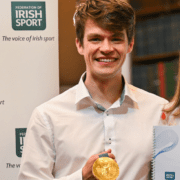
Our partners, The Federation of Irish Sport is thrilled to announce the shortlist of finalists for the much-anticipated 2026 Irish Sport Industry Awards. Set to take place on Tuesday, 19th May at the prestigious College Green Hotel in Dublin, this event promises to be an exciting evening celebrating the power and impact of sport across Ireland. Adding to the anticipation on the night will be the unveiling of three prestigious individual honours: the Outstanding Achievement & Contribution to Sport Award, the KPMG Women in Sport Award, and the Jimmy Magee (ASJI) Sports Coverage of the YearAward.

The Irish Sport Industry Awards 2026 will be a national platform where sport, diplomacy, and business converge — showcasing how Ireland can turn global sporting connections into real economic growth. Special guest speakers on the night include Minister for Sport and Postal Policy, Minister Charlie McConalogue TD and Minister for International Development and Diaspora, Minister Neale Richmond TD.

Now in its 9th year, the Irish Sport Industry Awards continue to recognise excellence across the sector, with 13 award categories shining a spotlight on innovation, collaboration, inclusivity, and sustainability. This year sees the introduction of two new categories: Best Initiative to Promote Sustainability in Sport, sponsored by MyWaste.ie, and Best Initiative to Promote Disability in Sport, sponsored by Sport Ireland, reflecting the growing importance of environmental responsibility and accessibility within Irish sport.

Mary O’Connor, CEO of the Federation of Irish Sport said:

“The Federation is delighted to host the 9th annual Irish Sport Industry Awards, recognising and rewarding excellence in the business of sport and entrepreneurship and the immeasurable work being done by our National Governing Bodies in Sport and the National Network of Local Sports Partnerships. The continued growth of these awards, including the addition of new categories focused on sustainability and disability inclusion, reflects the evolving and positive impact of sport on Irish society. From health and education to social inclusion, tourism, and economic development, sport plays a vital role. These awards provide an important opportunity to celebrate the sector’s contribution, including the more than 64,000 people employed across Irish sport.”

Jill Downey, Chief Sponsorship & Sustainability Officer, Core and Chair of the Judging Panel reflected:

My fellow judges and I were hugely impressed by the continued progression across Irish sport over the past year. The standard of entries reflected an industry embracing innovation, inclusivity, and long-term impact at every level. I’d like to sincerely thank the judging panel for their dedication throughout the process, as competition across many categories was exceptionally strong. It’s an exciting time for Irish sport, with real momentum and ambition driving the industry forward.”

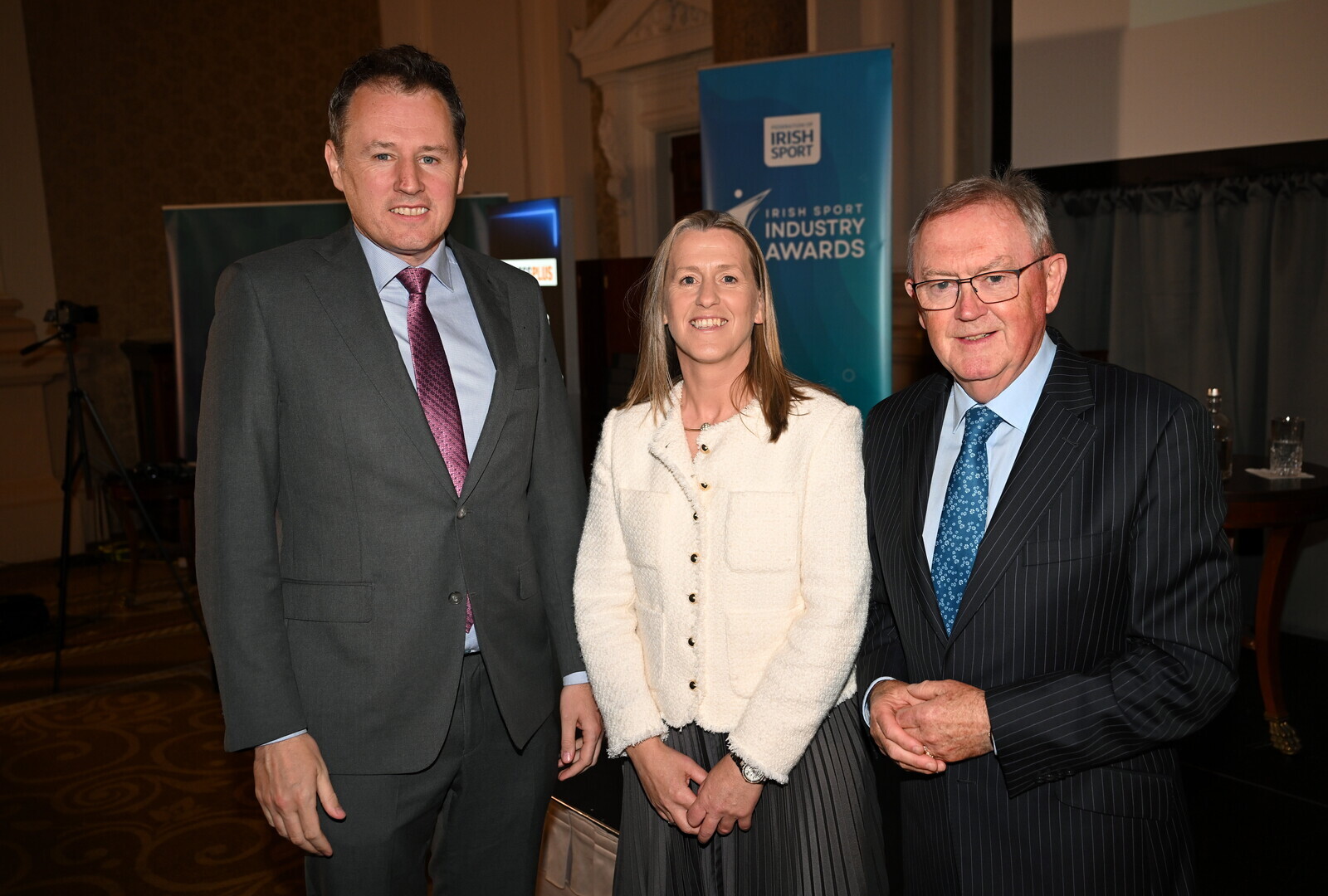
Minister Charlie McConalogue TD, Minister for Sport and Postal Policy, FIS CEO Mary O’Connor and awards MC Broadcaster Sean O’Rourke, pictured at the 2025 awards

2026 Irish Sport Industry Awards – Finalists


Best Commercial Partnership in Sport sponsored by Dublin City Sport and Wellbeing Partnership

  • GAA and Irish Life Healthy Clubs Programme
  • LGFA and Lidl Ireland #SeriousSupport
  • FAI and Sky Bound by Belief
  • Athletics Ireland McCabes Pharmacy Fit For Life 

Best Use of Communications Platforms in Sport & Physical Activity sponsored by MWX Media Ltd.

  • Tennis Ireland Davis Cup & Irish Open
  • Badminton Ireland & Sport Narrative AIG VICTOR Irish Open
  • Basketball Ireland SpotLight Her
  • FAI League of Ireland “It’s a Way of Life”

Best Initiative to Promote Sustainability in Sport sponsored by MyWaste.ie

  • Golf Ireland Drive The Green
  • GAA Green Club Programme
  • Munster Rugby A Different Approach to Impact
  • Clare Local Development Company LEADER, SICAP and rural recreation

Best Initiative to Promote Disability in Sport & Physical Activity sponsored by Sport Ireland

  • Special Olympics Transforming Lives Through Sport
  • Kildare Local Sports Partnership The Kildare Inclusivity Festival
  • Swim Ireland Swim Access Project
  • Golf Ireland Golf4All 
  • Liquid therapy Making Waves Project

Best Initiative to Promote Diversity, Equality & Inclusion in Sport & Physical Activity

  • Laois Sports Partnership Outdoor Survivalist Camps
  • Irish Sailing Watersports Inclusion Games 
  • Virgin Media, PHD M& Diageo Ireland Audio Description (AD), Irish Sign Language (ISL), and inclusive production
  • Wicklow Sports & Recreation Partnership &Trail Criú Building Inclusive Communities Through Trail Running

Best Initiative to Promote Women in Sport & Physical Activity

  • Boxing Ireland LEAP Programme
  • Canoeing Ireland Bridging the Gap
  • Athletics Ireland Girls Squad Programme
  • Tennis Ireland Women in Tennis Programme
  • Longford Sports Partnership Roma Women CVICINES & SASTO – Sport & Health Inclusion Pilot

Best New Sports Business of the Year

  • Grow Sport
  • Anyscor
  • Colata
  • Sports Impact Technologies 

Best Sports Business of the Year

  • ForeFront group
  • FAI LOITV 
  • Torpey 
  • DB Sports

Local Sport Partnership of the Year

  • Meath Sports Partnership
  • Laois Sports Partnership
  • Longford Sports Partnership
  • Dún Laoghaire Rathdown Sports Partnership

National Governing Body of the Year sponsored by MarshE

  • Football Association of Ireland 
  • Golf Ireland
  • Athletics Ireland
  • Special Olympics Ireland

Individual Award Winners Announced on the Night:

  • Outstanding Achievement & Contribution to Sport Award, presented by the Federation of Irish Sport 
  • KPMG Women in Sport Award, sponsored by KPMG Ireland
  • Jimmy Magee Sports Coverage of the Year Award, in partnership with the Association of Sports Journalists in Ireland


Behind the Judging: Meet the Experts

  1. Jill Downey, Chief Sponsorship & Sustainability Officer, Core
  2. Rob Hartnett, Founder, CEO Sport for Business
  3. Shane Califf, Head of the Organisational Development & Change Unit, Sport Ireland
  4. Maeve Buckley, Director, Leading Sport
  5. Ronan McCormack, Group Marketing Manager, Dalata Group Hotel
  6. Brenda O’Donnell, CEO, Active Disability Ireland
  7. Tom Fox, Co-Founder of 53Six
  8. Catherine Tiernan, Commercial Director, Olympic Federation of Ireland
  9. Stephen Bradshaw, Head of Marketing, Close Brothers Motor Finance
  10. Ger McTavish, Disability in Sport Lead, Sport Ireland
  11. Ronan Donagher, Former Head of Games Systems
  12. Anne McCormack, General Manager Edmondstown GC, former CEO Hockey Ireland


For more on the Irish Sport Industry awards, contact: Clare Louise O’Donoghue, Head of Commercial and Marketing on 086 0437887 or at clarelouise.odonoghue@irishsport.ie. or visit www.irishsportindustryawards.ie


Two people shaking hands across a desk during an interview, with a CV visible in the foreground.

What Fundraisers Want in Their Next Role

To attract and retain fundraisers, nonprofits need more than a competitive salary. Here’s what senior candidates really look for before saying yes.

Secret Link